


Where To Find Cheap Houses In Japan? Your Akiya Search Guide

Cheap houses in Japan are widely available because of the country's 9 million vacant homes (akiya, 空き家), a declining population, and a tax system that depreciates wooden buildings to zero value within 22 years.
Foreigners can buy property in Japan with no citizenship or visa restrictions, and akiya properties in rural areas can cost as little as 50,000 yen ($350 USD) or even be listed for free.
However, most cheap houses require renovation costing 3 to 10 million yen or more.
This guide covers how to find cheap houses in Japan through akiya banks and real estate agents, what to know before purchasing, the best locations for affordable properties, and the hidden costs of buying abandoned houses in Japan.
How to find cheap houses for sale in Japan
First, you must know how to find a cheap house in Japan. With the right resources, you might even find a free house.
Cheap house prices in Japan by region
Region |
Typical akiya price range |
Renovation estimate |
Notes |
Rural countryside (Hokkaido, Tohoku, Shikoku) |
0 to 500,000 yen ($0 to $3,500 USD) |
3 to 10 million yen |
Lowest purchase prices. Farthest from cities. May have limited infrastructure. |
Suburban Tokyo (Okutama, Tochigi, Yamanashi) |
500,000 to 5 million yen ($3,500 to $35,000 USD) |
3 to 8 million yen |
Within 1 to 2 hours of central Tokyo by train. Better resale potential. |
Regional cities (Fukuoka, Sapporo, Nagano) |
1 to 8 million yen ($7,000 to $55,000 USD) |
2 to 6 million yen |
Access to city amenities and healthcare. Growing demand from remote workers. |
Okinawa |
2 to 10 million yen ($14,000 to $70,000 USD) |
3 to 8 million yen |
Concrete construction. Different style. Higher humidity and typhoon resistance costs. |
All prices are approximate as of 2026 and vary widely by condition, location, and land size. Renovation costs depend on the property's age, structural condition, and whether earthquake retrofitting is needed.
a. Akiya banks
Think of akiya banks as real estate websites that list available properties. More specifically, their listings are typically lower than regular property listings, as these houses are abandoned.
Popular akiya banks for foreigners to use are:
Depending on the akiya bank, you will need to contact them so they can find other properties that are more suited to your needs.
b. Real estate agents
Real estate agents are a great resource for finding akiya houses for sale in Japan. However, if they specialize in cheap akiyas, you are golden to find something that can become your dream home.
These agents can access listings that aren't featured on akiya banks or real estate websites. Plus, they can help you with paperwork, negotiations, and translations to make the process smoother.
Why are houses in Japan so cheap?
Cheap houses exist in Japan primarily because of three structural factors.
First, Japan's tax system assigns a statutory useful life of 22 years to wooden houses.
After that period, the building's value for tax and lending purposes is zero, even if the structure is physically sound.
Japanese banks will not issue mortgages against a building with zero book value, which drives prices down dramatically.
Second, Japan's population has been declining since its peak of 128 million in 2008, falling to approximately 122 million by 2025.
Younger generations are migrating to Tokyo, Osaka, and other major cities, leaving rural homes empty. As of the 2023 Housing and Land Statistical Survey, Japan has approximately 9 million akiya (vacant homes), representing about 13.8% of all housing stock.
Third, Japanese culture historically favors newly built homes over older ones. In 2019, the Ministry of Land, Infrastructure, Transport and Tourism reported that 980,000 new homes were constructed while only 170,000 existing homes were sold. This preference means older homes, even in good condition, struggle to find buyers.
What to know before buying a cheap house in Japan
1. Visa status
If you are planning to stay at your house in Japan, you must consider your visa status.
People with permanent residence or spouse visas can easily live in Japan without issues. Because of their time restraint, those outside these visas will face some struggles, such as tourist and long-term visas.
2. Property tax payment
When you buy property in Japan, you'll pay two taxes:
A yearly property tax
A one-time real estate acquisition tax
Additionally, when you own a property in Japan, you'll need to pay the:
City planning tax
If you have tax obligations in Japan, such as the taxes above, you'll need a tax representative in Japan to pay your taxes on your behalf.
👉 Taxes are one of the most overlooked costs of akiya ownership. We broke down what foreign owners actually get wrong about akiya tax in Japan, with help from a licensed Fukuoka accountant.
MailMate’s tax representative service in Japan
MailMate's tax representative service allows you to assign MailMate as your tax representative so you can pay your taxes with your card and abroad.

Even when you are away from your property in Japan, you can still handle any important mail online, such as bills, government notifications, and other mail.
3. How to set up your akiya house
Even when you are away from your property in Japan, you can still handle any important mail online, such as bills, government notifications, and other mail.
MailMate's home setup services
Not in Japan? No worries. You can look at MailMate's Essential Package, where they will set up your utilities and be your liaison for your gas, water, and electricity.

Utility set up
To set up utilities in Japan, you can call or apply online.
However, akiya properties will require more checks to ensure that utility setups such as pipes and electrical wiring are functional. If repairs are needed, then those must be fixed before starting your utility services.
As such, MailMate can assist by coordinating inspections and setting up a smoother process.
Pay your utility bills abroad
Many bills in Japan will be sent to your address so you can pay domestically. You can set up an auto bank transfer, but it requires a Japanese bank account.
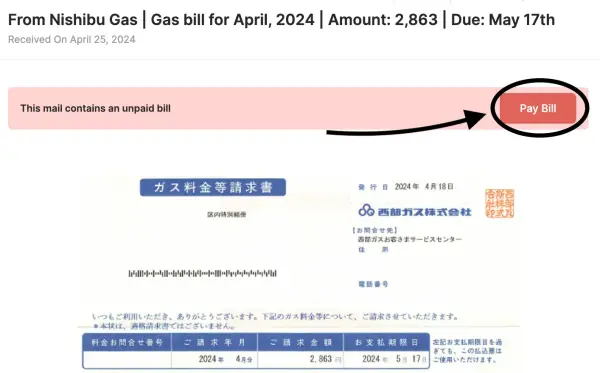
MailMate's services allow you to overcome this hurdle by letting you pay your bills abroad. Your bills will be forwarded to MailMate's scanning location, which will be uploaded to your dashboard so you can pay online.
A La Carte Services
MailMate has other additional services where you can request other services on your property, such as:
Fire and Disaster Insurance
Internet connection
Septic tanks contract
Solar panel setup and maintenance
Regular cleaning
4. Obtain a minpaku license (optional)
If you are looking to make that cheap house in Japan an Airbnb, you need a minpaku license and a private lodging business certificate or a minshuku license.
Before, only hotels, inns, hostels, and other business accommodations were allowed to rent out their spaces to guests.
But now, you can turn your second home in Japan into a vacation rental if you are away from using it. Just know that your property in Japan can only operate 180 days per year as an Airbnb.
Hidden costs of buying a cheap house in Japan
The purchase price of a cheap house in Japan is often the smallest part of the total cost.
Before buying, budget for these common expenses:
Renovations. Renovation costs typically range from 3 to 10 million yen depending on the property's condition. Common needs include roof repair, plumbing and electrical upgrades, earthquake retrofitting for houses built before 1981, and mold and termite treatment.
Closing costs. Closing costs include real estate agent fees (up to 3% plus 60,000 yen plus consumption tax), registration and stamp taxes, and judicial scrivener (shiho shoshi, 司法書士) fees of approximately 100,000 to 300,000 yen.
Anual fees. Ongoing annual costs include property tax (kotei shisan zei, 固定資産税), city planning tax, fire insurance, and utility bills. For a rural akiya, expect approximately 300,000 to 500,000 yen per year in total ongoing costs.
Inspection costs. Inspection fees for a professional building inspection (kenchiku shindan, 建築診断) cost approximately 50,000 to 100,000 yen and are strongly recommended before purchasing any older property.
If you do not live in Japan, you will need a tax representative (nozei kanrinin, 納税管理人) to handle your property tax obligations.
Locations to consider when looking for cheap houses in Japan
There are many akiya houses for sale in Japan. But here, we show you the most popular place to find cheap houses in Japan as a foreigner.
Tokyo

The Tokyo prefecture spans more west.
Everyone wants to live in Tokyo. Unfortunately, there aren't many akiya for sale in Tokyo city.
However, the Tokyo Prefecture is much larger and spans outside the city, such as:
Okutama
Nerima
Hinohara
Hino
Chofu
These locations have great transportation access to get in and out of Tokyo City within an hour or two.
Other locations are between an hour and two hours away from Tokyo by Shinkansen:
Nikko
Shizuoka
Tochigi
Yamanashi
Even though they are akiyas, these houses can cost more than the average abandoned house in other locations, as these houses can cost under 1 million yen.
Countryside
There are plenty of cheap houses for sale in Japan's countryside or inaka.

While Japan's rural areas do mean away from the city, these locations include places that people may not consider, such as:
Hokkaido
Iwate
Fukui
Gifu
Tokushima
Miyazaki
These locations have major cities. Since most cheap houses in Japan are farther away from cities, these properties are much more affordable than in Tokyo. Plus, any of these locations make a great place to live if you are looking for nature.
Additionally, many Japanese countryside houses have traditional floor plans. So, if you like traditional rooms and layouts, these houses are for you.
Okinawa
Things are a little different for those looking for cheap houses for sale in Okinawa, Japan, as they have a completely different style than mainland Japan.

Many houses in Okinawa are thick and tend to be made of concrete to withstand the high humidity and typhoons. They also have flat roofs, but more traditional ones will have red roof tiles.
Additionally, many Okinawan houses are influenced by the previous Ryukyu Kingdom, where houses are more spacious and have outdoor spaces. Additionally, your cheap house in Okinawa may have a pair of Shisa, a dog-lion creature, to protect your house from evil.
Frequently asked questions
Is it true you can buy a house in Japan for $500?
Yes, akiya (abandoned houses) listed for $500 or even free do exist on akiya banks and through municipal programs across Japan. However, the purchase price is only a small part of the total cost. Renovation typically costs 3 to 10 million yen ($20,000 to $70,000 USD), and even a 0 yen property involves closing costs of 200,000 to 500,000 yen. A real estate agent specializing in akiya can help you find properties not listed online and assess whether the total investment makes financial sense.
Why are old houses in Japan so cheap?
Old houses in Japan are cheap primarily because Japan's tax system depreciates wooden buildings to zero value within 22 years. After that period, banks will not lend against the building, making it nearly impossible to sell at any meaningful price. Japan's declining population (down from 128 million in 2008 to approximately 122 million) means fewer buyers, especially in rural areas where young people have migrated to cities. Municipal governments now actively sell these abandoned properties through akiya banks at low prices, sometimes for free, to attract new residents and prevent further deterioration.
Can foreigners buy houses in Japan?
Yes. Japan places no citizenship, visa, or residency restrictions on foreign property ownership. Any foreigner can buy land, a house, or an apartment with the same legal rights as a Japanese citizen. Starting in April 2026, all property buyers must disclose their nationality at the time of registration at the Legal Affairs Bureau. This is a reporting requirement, not a restriction on purchasing. Foreigner-friendly akiya banks and real estate agents can help with the paperwork, and many accept international wire transfers.
How many abandoned houses are there in Japan?
As of the 2023 Housing and Land Statistical Survey by Japan's Ministry of Internal Affairs and Communications, there are approximately 9 million vacant homes (akiya) in Japan, representing about 13.8% of all housing stock. The number has roughly doubled since 1993 and is projected to continue rising. Vacant homes are concentrated in rural areas and depopulating prefectures, but abandoned apartments have also been increasing in urban settings over the past decade.
What are the hidden costs of buying a cheap house in Japan?
The purchase price of a cheap akiya is often the smallest expense. Renovation typically costs 3 to 10 million yen depending on the property's age and condition, covering roof repair, plumbing, electrical upgrades, and earthquake retrofitting. Closing costs include real estate agent fees, registration taxes, and judicial scrivener fees totaling approximately 300,000 to 800,000 yen. Ongoing annual costs for property tax, city planning tax, insurance, and utility bills run approximately 300,000 to 500,000 yen per year. Non-resident owners must also appoint a tax representative in Japan.
Where are the cheapest houses in Japan?
The cheapest houses in Japan are found in rural prefectures with declining populations, including Hokkaido, Akita, Iwate, Fukui, Tokushima, and Miyazaki. Properties in these areas can be listed for as little as 0 to 500,000 yen. Suburban areas within 1 to 2 hours of Tokyo (such as Okutama, Tochigi, and Yamanashi) offer slightly higher prices but much better transport access. Okinawa has affordable properties with a unique architectural style but higher renovation costs due to concrete construction and typhoon damage.
Do I need to speak Japanese to buy a cheap house in Japan?
Not necessarily, but it makes the process much easier. Most akiya banks and municipal government offices operate primarily in Japanese. Foreigner-friendly akiya platforms such as Akiya and Inaka, Akiya-Mart, and AkiyaBanks offer English-language listings and support. Hiring a bilingual real estate agent or using a service like MailMate for property-related mail, tax payments, and utility setup can help you manage the purchasing process and ongoing property management without fluent Japanese.
Can I turn a cheap house in Japan into an Airbnb?
Yes, but you need a minpaku license (private lodging business notification) under Japan's 2018 minpaku law. Your property can operate as a short-term rental for a maximum of 180 days per year nationwide, though some municipalities impose stricter limits. You will also need to register with your local government and comply with fire safety, sanitation, and guest notification requirements. If you want to operate year-round, you would need a ryokan or minshuku license instead.
In closing
While there are plenty of available properties elsewhere in the world, you can certainly find cheap houses in Japan. If you are considering akiyas, owning property and starting a life here is possible with the correct visa status.
Whether you are interested in rural Japan, traditional Japanese architecture, or trying to modernize these abandoned homes, there are plenty of properties in and out around Japan.
일본 우편물 처리에 너무 많은 시간을 소비하고 있나요?
가상 우편함 + 번역 서비스는 월 3800원부터 시작합니다. 30일 환불 보장.